
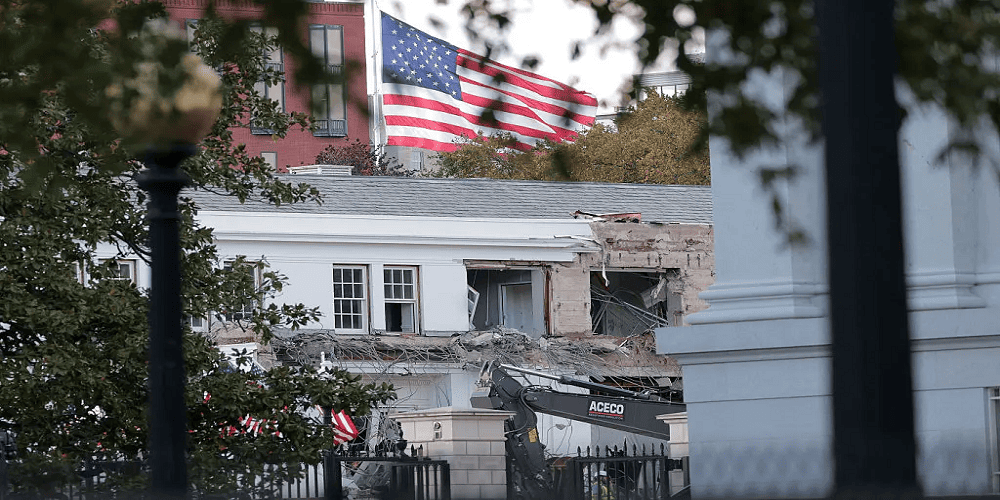
On October 20, 2025, a significant transformation began at the White House as demolition crews commenced work on the East Wing to make way for a new, expansive ballroom. This project, championed by President Donald Trump, marks one of the most substantial structural changes to the Executive Mansion in over a century.
The Vision Behind the Ballroom
President Trump has long advocated for the construction of a grand ballroom at the White House, a vision he claims has been desired by every president for the past 150 years. The new ballroom is designed to host state dinners, formal events, and large gatherings, accommodating up to 999 guests. The project is estimated to cost $250 million and is being privately funded by major corporations, including Apple, Amazon, Lockheed Martin, and Coinbase, with Trump contributing personally (The Washington Post).
The ballroom's design draws inspiration from Trump's Mar-a-Lago resort, featuring ornate elements such as crystal chandeliers, gilded columns, and gold inlays. The structure will be constructed with bulletproof glass sides and is expected to nearly double the size of the White House complex (TIME).
The East Wing: A Historical Overview
The East Wing of the White House, built in 1902 and expanded in 1942, has historically served as office space for the First Lady and her staff. It also houses the White House theater and has been used for hosting foreign dignitaries. Over the years, the East Wing has undergone various renovations, but none as extensive as the current project.
Despite previous assurances that the new ballroom would not interfere with the historic building, demolition crews have begun tearing through the existing East Wing. This has sparked criticism from Democratic officials and preservationists who argue that the project compromises the integrity of the White House's historic architecture (The Washington Post).
Public Reaction and Controversy
The demolition has elicited strong reactions from various quarters. Critics have labeled the project elitist and out-of-touch with American needs. Some have even compared the scale of the demolition to the damage inflicted by British troops during the War of 1812, highlighting the perceived severity of the structural changes (The Independent).
In response, President Trump defended the project, emphasizing that the East Wing is technically separate from the main White House building and that the renovations will modernize and beautify the space. He also assured the public that the new ballroom will be completed before the end of his term in January 2029 (Reuters).
The Role of Private Funding
One of the most notable aspects of this project is its funding model. The $250 million cost is being met entirely through private donations, with no taxpayer money involved. Major corporations have pledged significant contributions, with some donating up to $25 million each. This approach has raised questions about the influence of corporate donors on presidential projects and the potential for conflicts of interest (The Washington Post).
Architectural and Design Considerations
The new ballroom is being designed by McCrery Architects and built by Clark Construction. The structure will feature a blend of modern and classical elements, with a focus on luxury and grandeur. The use of bulletproof glass sides is intended to provide security while offering unobstructed views of the surrounding grounds, including the Washington Monument (TIME).
The project also includes plans to modernize the East Wing, which will involve significant structural changes. While the ballroom will be a separate addition, the extensive renovations to the East Wing have raised concerns among preservationists about the potential loss of historic features and the overall impact on the White House's architectural integrity (Reuters).
Legal and Procedural Questions
The commencement of demolition work has raised questions about the approval process for such a significant alteration to a national landmark. While the White House has stated that the project has received the necessary approvals, some legal experts have questioned whether the demolition and construction work complies with federal preservation laws and regulations (Wall Street Journal).
The Broader Implications
This project is part of a broader vision by President Trump to reshape elements of the nation's capital infrastructure. In addition to the ballroom, Trump has proposed other major projects, including a memorial arch near Arlington National Cemetery to commemorate the U.S. semiquincentennial in 2026. These initiatives reflect his focus on legacy-building through large-scale infrastructure projects (Reuters).
Frequently Asked Questions (FAQs)
1. Why is the East Wing being demolished?
The East Wing is being demolished to make way for a new, 90,000-square-foot ballroom that will host state dinners and large gatherings. The project aims to modernize the White House and provide a venue that meets the needs of contemporary presidential functions.
2. Who is funding the White House ballroom project?
The $250 million cost of the project is being met entirely through private donations from major corporations, including Apple, Amazon, Lockheed Martin, and Coinbase, with President Trump contributing personally.
3. Will the demolition affect the main White House building?
The demolition is focused on the East Wing, which is considered a separate structure from the main White House building. However, the extensive renovations have raised concerns about potential impacts on the overall architectural integrity of the White House.
4. When is the new ballroom expected to be completed?
The new ballroom is expected to be completed before the end of President Trump's term in January 2029.
5. Has the project received the necessary approvals?
While the White House has stated that the project has received the necessary approvals, some legal experts have questioned whether the demolition and construction work complies with federal preservation laws and regulations.
Conclusion
The demolition of the White House East Wing marks a pivotal moment in the history of the Executive Mansion. While the new ballroom promises to enhance the White House's capacity to host grand events, it also raises important questions about the balance between modernization and preservation of historic landmarks. As construction progresses, the nation will be watching closely to see how this ambitious project unfolds and what legacy it leaves behind.
Leave A Comment
0 Comment